Bebo UK: Why Britain Loved It More Than Anywhere Else
Ask an American if they remember Bebo and you'll probably get a blank look. Ask anyone who grew up in the UK or Ireland between 2005 and 2009 and you'll get the opposite: an immediate flash of recognition, probably followed by a specific memory. A skin they used. A song they put in their Flash Box. Someone who gave them a Luv. The thing about Bebo and Britain is that it wasn't just popular here. It was a cultural moment in a way it wasn't anywhere else.
Bebo Dominated the UK
While MySpace was the default social network in America and most of the world, the UK went a different way. Bebo spread through British and Irish schools like nothing before it and by 2007 and 2008 it was consistently the most visited social networking site in the UK, outranking both MySpace and the early Facebook in monthly traffic.
Bebo in the UK at its peak
At its height, Bebo had more than 10 million registered users in the UK and Ireland. Among teenagers specifically, it was essentially universal. If you were at school in Britain between 2006 and 2009, you were almost certainly on Bebo.
The reasons for this aren't entirely clear but a few things likely helped. Bebo was founded by a British-American couple and had a feel that seemed to resonate with British users more than MySpace's American-flavoured design did. The features, particularly the Whiteboard and the Luv system, suited the slightly more reserved, slightly more ironic way British teenagers communicated online.
It Was Baked Into British Teen Culture
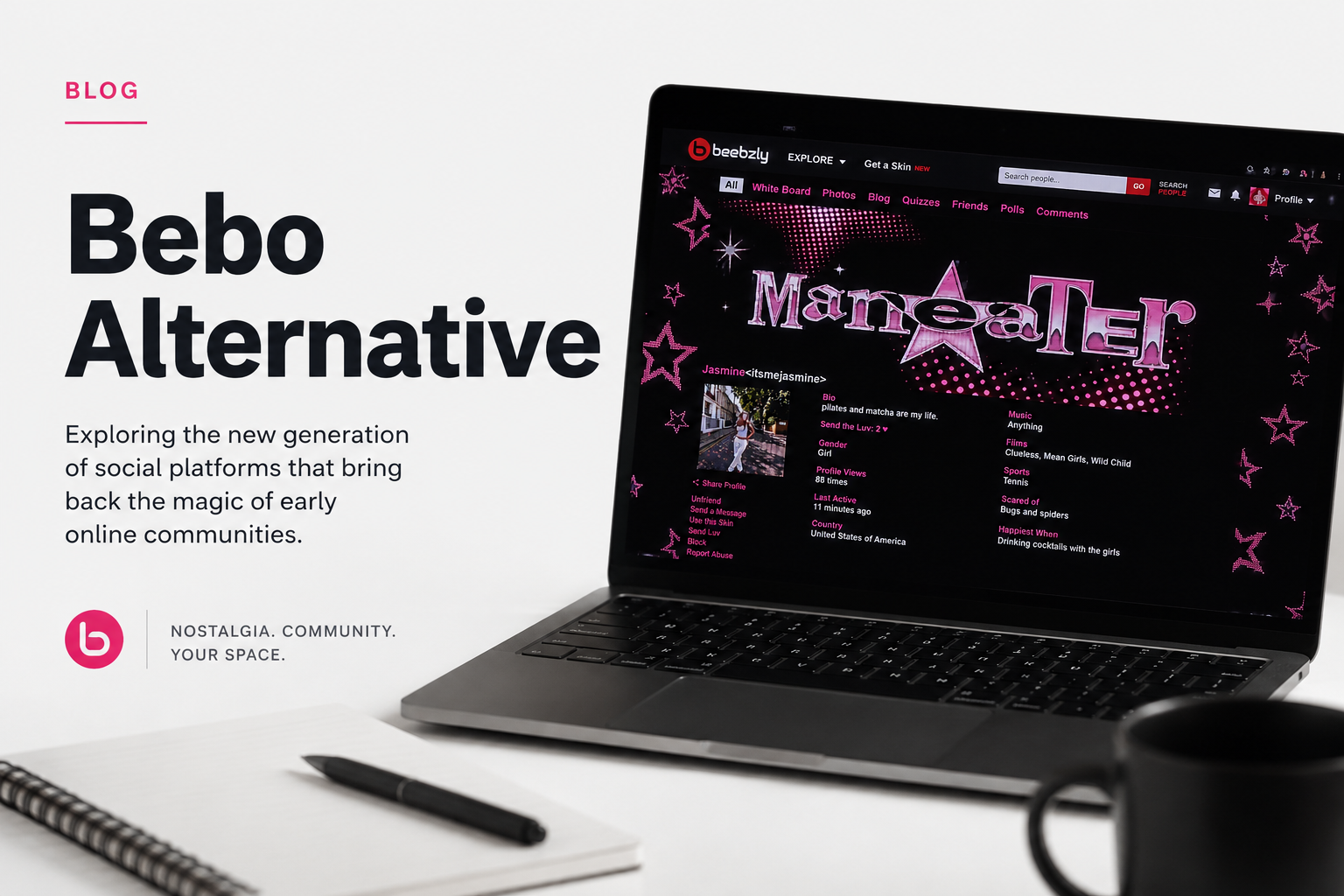
Bebo wasn't just a website British teenagers used. It was woven into the fabric of secondary school social life in a way that's hard to fully convey now. Your Bebo profile was an extension of your social identity at school. Who was in your Top 16 was discussed in person. Giving someone a Luv was an act with real social weight. Getting a drawing on your Whiteboard from the right person was the early 2000s equivalent of a notification you actually cared about.
For a generation of British teenagers, Bebo was the internet. Not part of it. The whole thing. After school you went on Bebo. At the weekend you checked your Bebo. If something happened socially it showed up on Bebo. That level of cultural penetration is something very few platforms have achieved in the UK before or since.
Why Facebook Couldn't Immediately Replace It
Facebook grew rapidly in the UK from around 2008 onwards and eventually absorbed the Bebo generation entirely. But for a couple of years there was genuine resistance. Bebo users didn't want to move. The features were better. The community was already there. The profiles were already built and personalised.
What Facebook had was momentum and money. It expanded aggressively, attracted developers, and built network effects that became impossible to overcome. Eventually everyone migrated because everyone else was migrating. But plenty of people resented it and a surprising number still do.
Beebzly Is Built in Britain
Beebzly was built by Liam, a developer from the UK who grew up on Bebo and wanted to bring that experience back. It's not an American company trying to capitalise on British nostalgia. It's a platform built by someone who lived through the Bebo era in the UK and understood exactly what made it feel the way it did.
If you were part of the Bebo generation in Britain or Ireland, Beebzly is built for you specifically. Same features, same spirit, built by someone from the same place you were.